Some links on this page may be affiliate links. If you buy through these links, we may earn a commission at no extra cost to you.
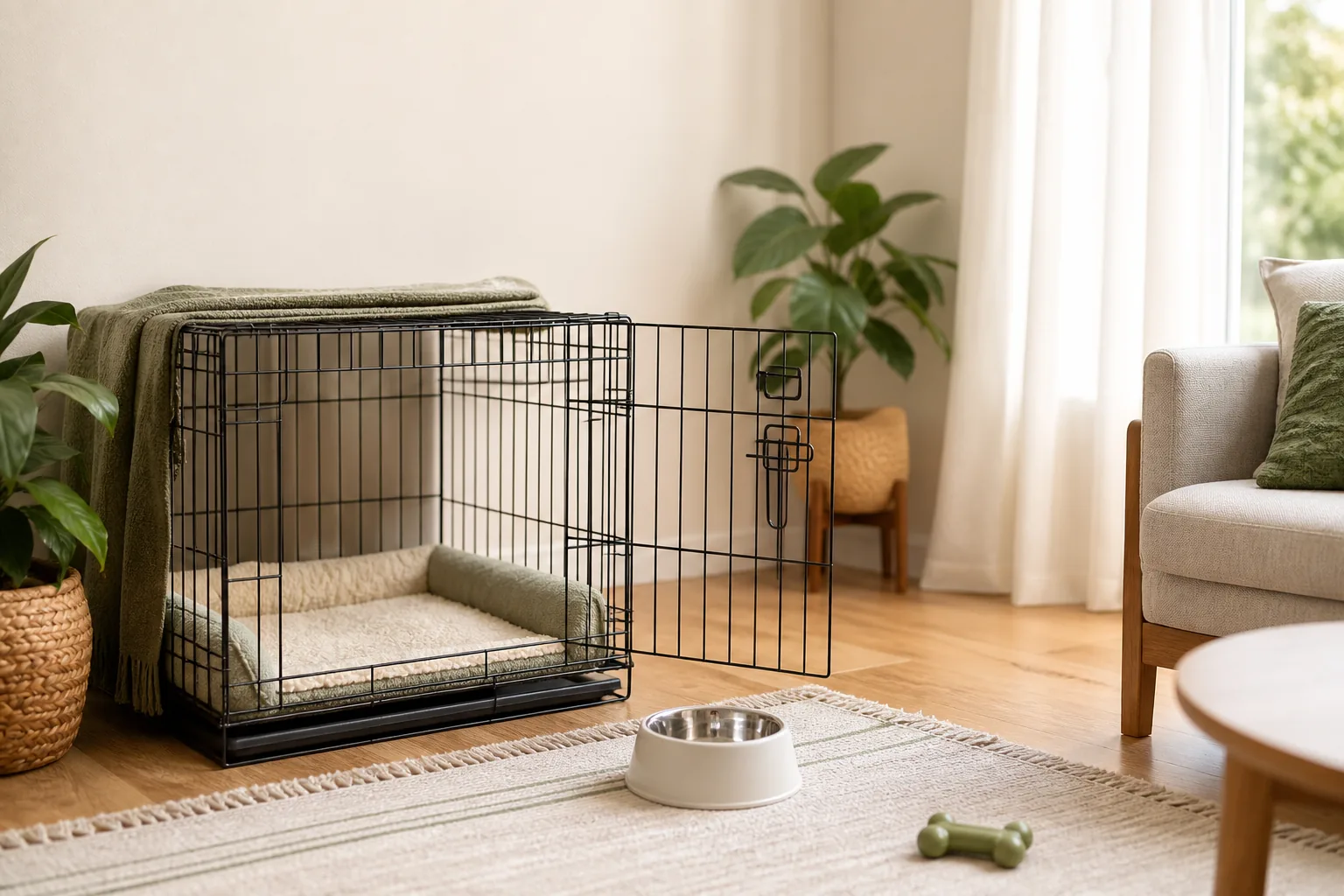
A good puppy crate setup is simple, safe, and easy to clean. The goal is not to buy every accessory. The goal is to create a calm resting space that fits your puppy, supports a routine, and avoids unsafe items inside the crate.
Amazon shopping shortcuts
These broad Amazon search links are starting points for comparison, not final product endorsements. Check current size, age fit, ingredients or materials, care instructions, price, availability, and seller details before buying.
- puppy crate starter kit — Quick checklist. Check current product details before buying.
- washable dog crate pad puppy — Bedding section. Check current product details before buying.
- puppy crate water bowl spill proof — Night setup section. Check current product details before buying.
Before buying, verify product links, safety language, sizing guidance, and any trainer or veterinary recommendations against the current product page and your puppy’s needs.
Quick checklist
- Properly sized crate
- Divider panel if the crate is adjustable
- Washable crate mat or pad
- Extra washable cover or towel for outside-crate cleanup
- Safe chew item approved for your puppy’s size and chewing style
- Water plan based on age, routine, and vet/trainer guidance
- Enzyme cleaner for accidents
- Nighttime placement plan
- Calm crate routine
- Backup sleeping plan for the first few nights
Step 1: Choose the right crate size
Your puppy should be able to stand, turn around, and lie down comfortably. A crate that is much too large can make potty training harder for some puppies, while a crate that is too small is uncomfortable and unfair.
If your puppy will grow quickly, an adjustable crate with a divider can be useful. Re-check the fit every few weeks during growth spurts.
Step 2: Keep bedding simple and washable
For most puppy setups, washable and easy-to-remove bedding is more useful than expensive plush bedding. Puppies can have accidents, chew fabric, or drag bedding around. Choose something that can be washed often and dried quickly.
Avoid thick bedding if your puppy chews or swallows fabric. If chewing is a concern, ask your vet or trainer what is appropriate.
Step 3: Place the crate where routine is easy
For the first nights, many puppies do better when the crate is near the owner’s sleeping area. This can make potty breaks easier and reduce panic. Later, the crate can be moved gradually if needed.
Keep the crate away from direct heat, cold drafts, and high-traffic chaos.
Step 4: Prepare the first-night routine
Before bedtime, plan:
- Last potty break timing
- Where leash and shoes will be kept
- How you will respond to whining
- Where cleanup supplies will be stored
- Whether alarms are needed for potty breaks
The routine matters more than the number of products.
Step 5: What not to put in the crate
Avoid unsafe or unverified items. Do not leave anything your puppy may destroy, swallow, or get tangled in. Be careful with loose blankets, collars, dangling tags, soft toys, and chews if your puppy is not supervised.
Internal links to add later
- New Puppy Checklist Products
- Puppy Harness Size Guide
- Puppy Proofing Checklist Products
- Best Puppy Training Treats
- Puppy hub
FAQ
Should a puppy crate have bedding?
Many puppies do well with simple washable bedding, but heavy chewers may need a safer setup. Choose bedding based on your puppy’s chewing behavior and comfort.
Should I put water in a puppy crate overnight?
It depends on age, health, climate, and routine. Ask your vet or trainer if you are unsure, especially for very young puppies or puppies with medical needs.
Where should the crate go on the first night?
A nearby, quiet location often helps because potty breaks and reassurance are easier. You can gradually move the crate later if needed.
What is the most important crate setup product?
A correctly sized crate and an easy-clean routine matter more than extra accessories.