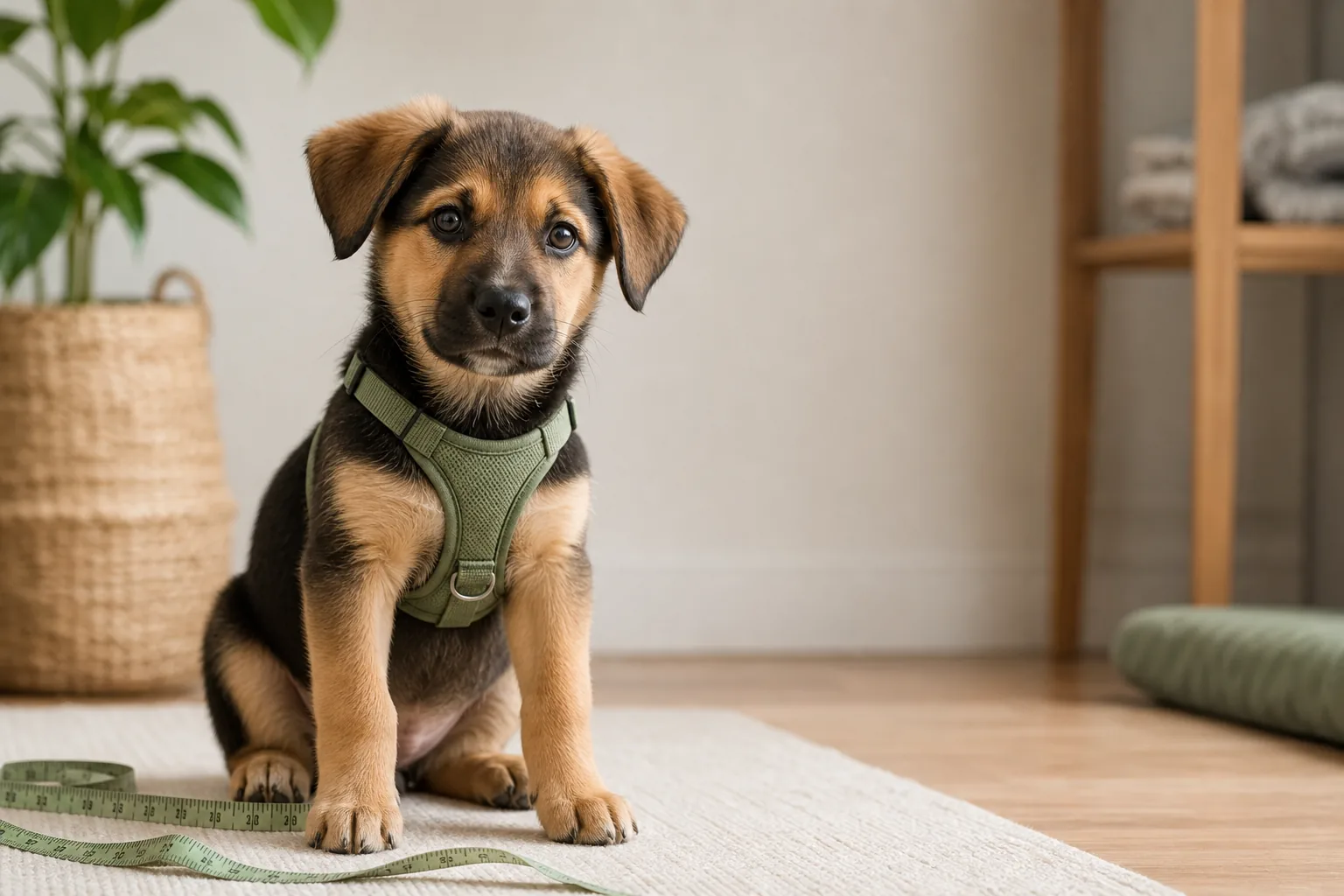
Some links on this page may be affiliate links. If you buy through these links, we may earn a commission at no extra cost to you. We only include product information we can source from official pages or trusted merchant listings.
Choosing a puppy harness is mostly about fit, adjustability, and re-checking size as your puppy grows. A harness that fits today may become too tight within a few weeks, especially for fast-growing puppies.
This guide is general education, not product-specific sizing advice. Always check the size chart for the exact harness before buying.
Quick steps
- Use a soft measuring tape.
- Measure around the widest part of the chest or girth, usually behind the front legs.
- Check the product’s size chart before buying.
- Choose adjustable straps when possible.
- Re-check fit often during growth.
What measurements matter?
The most important measurement is usually chest girth. Some harnesses also use neck size, weight range, or body length. Do not rely on weight alone because two puppies with the same weight can have different body shapes.
If a product chart lists breed examples, treat them as rough guidance only. Your puppy’s actual measurement matters more.
How tight should a puppy harness be?
A common fit check is the two-finger rule: you should be able to fit about two fingers under the straps without the harness sliding loosely.
The harness should not rub behind the legs, restrict shoulder movement, press into the neck, or let the puppy slip out backward.
When to re-check fit
Re-check fit:
- Weekly for young puppies
- After growth spurts
- After grooming
- After weight changes
- If the puppy starts backing out, chafing, coughing, or resisting the harness
First harness features to consider
- Multiple adjustment points
- Lightweight materials
- Soft edges around chest and legs
- Secure closure
- Easy on/off design
- Clear size chart
- Enough room for current comfort, but not so much that the puppy can slip out
Common mistakes
- Buying based on breed name only
- Leaving too much “growth room”
- Choosing a style that rubs behind the legs
- Assuming collar size translates to harness size
- Forgetting to re-check fit as the puppy grows
FAQ
Can a puppy grow into a larger harness?
A little adjustability is helpful, but an oversized harness can be unsafe if the puppy can slip out. The harness should fit securely now.
Is a step-in harness easier for puppies?
Sometimes. Step-in styles can help puppies that dislike gear going over the head, but body shape and escape risk still matter.
Should a puppy wear a harness all day?
Usually no. A harness is for walks, training, and supervised use. Remove it when not needed unless your veterinarian or trainer advises otherwise.
How often should I measure my puppy?
For young puppies, weekly checks are practical. Measure again after growth spurts, grooming, or any visible weight or body-shape change.